The Habits of Genius: Curiosity
By David Steinberg
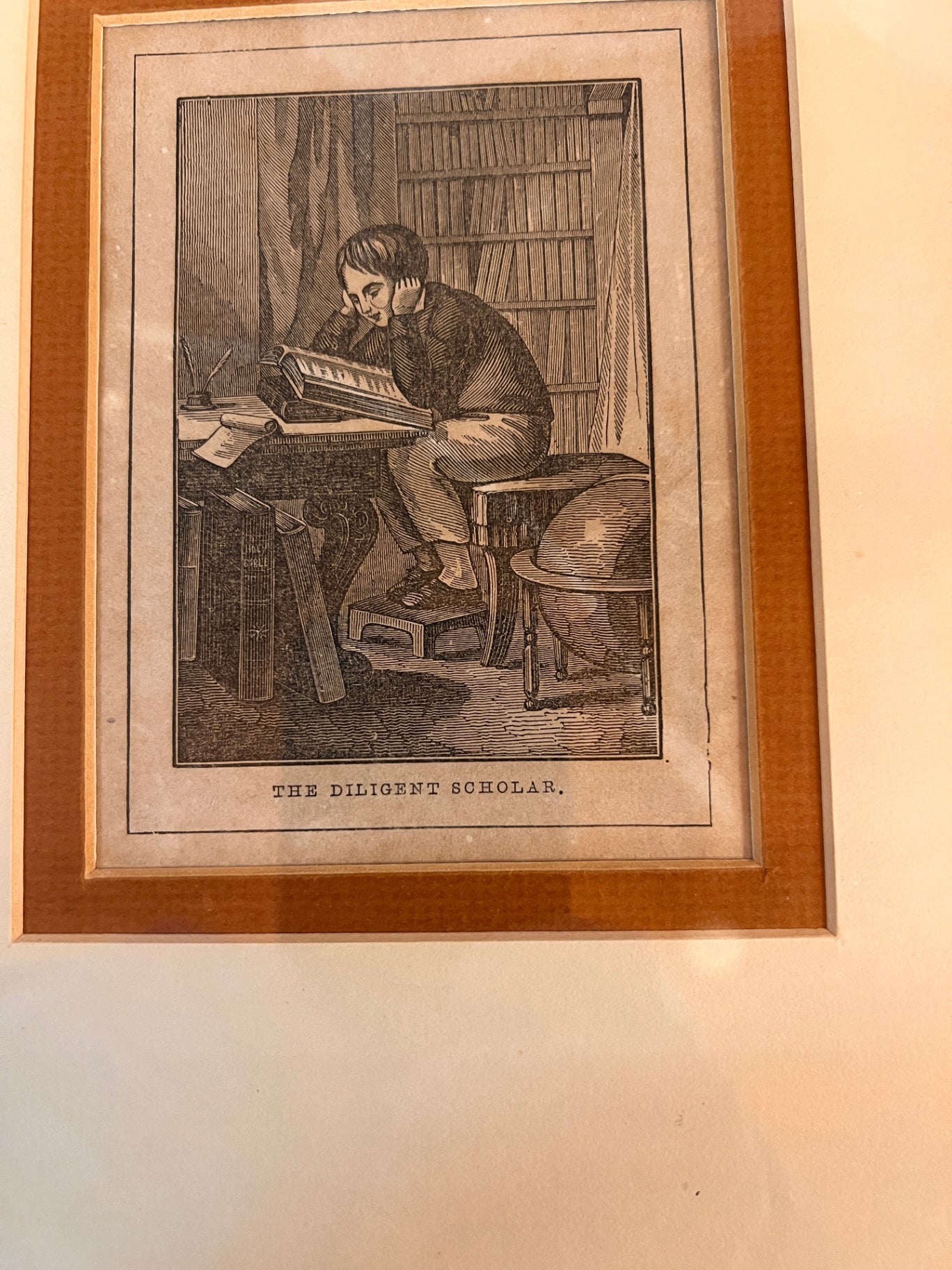
To me curiosity is not passive, but aggressive inquiry, the refusal to accept surfaces. The curious mind treats every answer as a doorway to ten new questions. It is intellectual trespass, enacted daily.
True curiosity is uncomfortable. It demands you abandon the warmth of certainty for the cold of not-knowing. Children ask "why" until adults grow weary; genius never stops asking. It sees the familiar as foreign, the ordinary as encrypted. Where others see a falling apple, curiosity sees a planet pulling.
**Historical Examples**
Leonardo da Vinci's notebooks held 13,000 pages of questions—from "Why does the eye see a thing more clearly in dreams?" to detailed sketches of unborn children he obtained through dealings with grave robbers. His curiosity was amoral in its hunger.
Barbara McClintock spent six decades studying corn genetics in scientific exile. She spoke of "listening" to what each plant wanted to tell her, developing such intimacy with maize chromosomes that she could identify each one by sight. When her jumping genes theory was finally accepted, she was 81. "I knew I was right," she said. The Nobel committee agreed, forty years late.
In 1847, Ignaz Semmelweis noticed that maternity wards staffed by doctors had three times the mortality rate of those run by midwives. His curiosity was specific: why? He discovered doctors performed autopsies before delivering babies—without washing their hands. His solution dropped mortality from 18% to 1%. His reward? Colleagues had him institutionalized. He died in an asylum, beaten by guards. Curiosity can be fatal to its bearer.
## Quotations
"I have no special talent. I am only passionately curious." — Albert Einstein
"Curiosity is insubordination in its purest form." — Vladimir Nabokov
"Curiosity is the lust of the mind." — Thomas Hobbes
"I think at 83 I'm still a promising beginner. I'm still learning." — Michelangelo (near death)
"Judge a man by his questions rather than his answers." — Voltaire
"The important thing is not to stop questioning. Curiosity has its own reason for existence." — Einstein
"Study the science of art. Study the art of science. Develop your senses—especially learn how to see." — Leonardo da Vinci
"Men love to wonder, and that is the seed of science." — Ralph Waldo Emerson
Written by David Steinberg